How to Choose the Right Steel Security Door for Your Home in 2026
How to Choose the Right Steel Security Door for Your Home in 2026
Residential security has become a global priority, and by 2026, the steel security door market is expected to grow at a steady compound annual growth rate of nearly 5.5%, driven by increasing urbanisation, rising property values, and more frequent extreme-weather events. Yet for B2B buyers — architects, general contractors, villa developers, and property managers — specifying the right steel security door is not simply a matter of picking the thickest slab of steel. A truly reliable door must balance mechanical strength, resistance to corrosion, thermal efficiency, hardware reliability, and compliance with regional certification standards. From the factory floor to the building site, every decision affects safety, longevity, and long-term replacement costs. This guide, written from the perspective of an experienced steel door manufacturer, outlines the critical technical and commercial factors you need to evaluate before signing a purchase order.
Assess the Security Level Required for Each Project
Not every residential project requires the same level of physical protection. A single-family villa in a suburban neighbourhood faces a different threat profile than a ground-floor apartment in a densely populated city centre. Before requesting quotations, assess the surrounding environment, crime statistics, and insurance requirements of the project. European standard EN 1627 classifies burglary resistance from grade RC1 to RC6, while North American projects more commonly reference BHMA/ANSI A156.30 or the UL 437 standard for locking mechanisms. A professionally designed security door should match the certification grade to the risk level; over-specifying a high-security door for a low-risk area inflates the budget unnecessarily, while under-specifying exposes the occupants to avoidable danger. In 2026, insurance providers in many regions also require a minimum security grade before coverage is granted, so make certification one of your first evaluation criteria.
Verify Steel Sheet Thickness and Core Construction
The mechanical performance of a steel security door begins with the physical properties of the sheet metal and the internal core. Door panels manufactured from cold-rolled or hot-dipped galvanised steel with a thickness of 1.0 mm to 1.5 mm are considered standard for residential applications. Anything below 0.8 mm is not suitable for venues requiring actual forced-entry resistance. Beyond panel thickness, pay careful attention to the internal fill material. Expanded honeycomb cardboard provides lightweight rigidity, while high-density polyurethane (PU) foam improves thermal insulation and resistance to denting. For coastal projects or regions with high humidity, verify that the steel undergoes a hot-dip galvanising process with a zinc layer of at least 60 g/m² to prevent rust spreading after scratches. As a factory manufacturer, we routinely advise clients to request corroded test samples or salt-spray test reports (such as ASTM B117) showing the number of hours a panel can withstand exposure without blistering — this is a reliable indicator of real-world life expectancy.
Inspect the Locking System and Reinforced Hinges
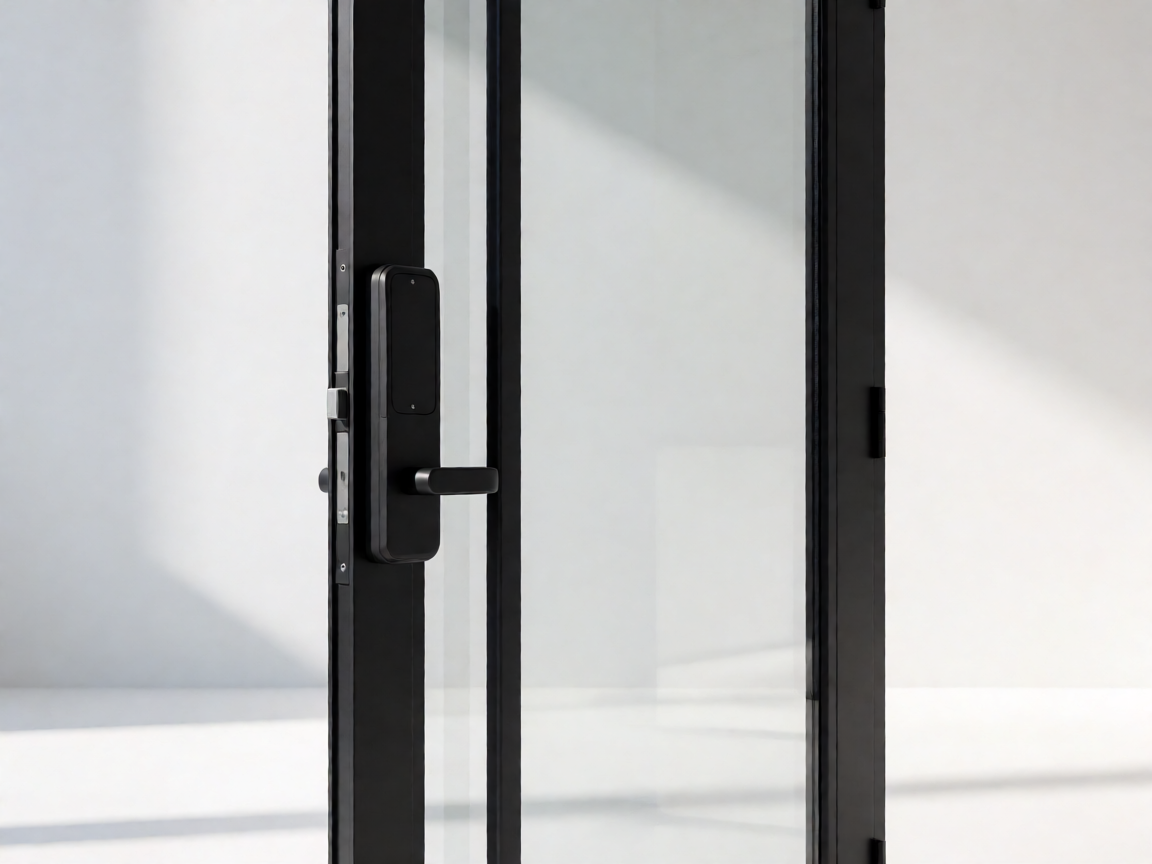
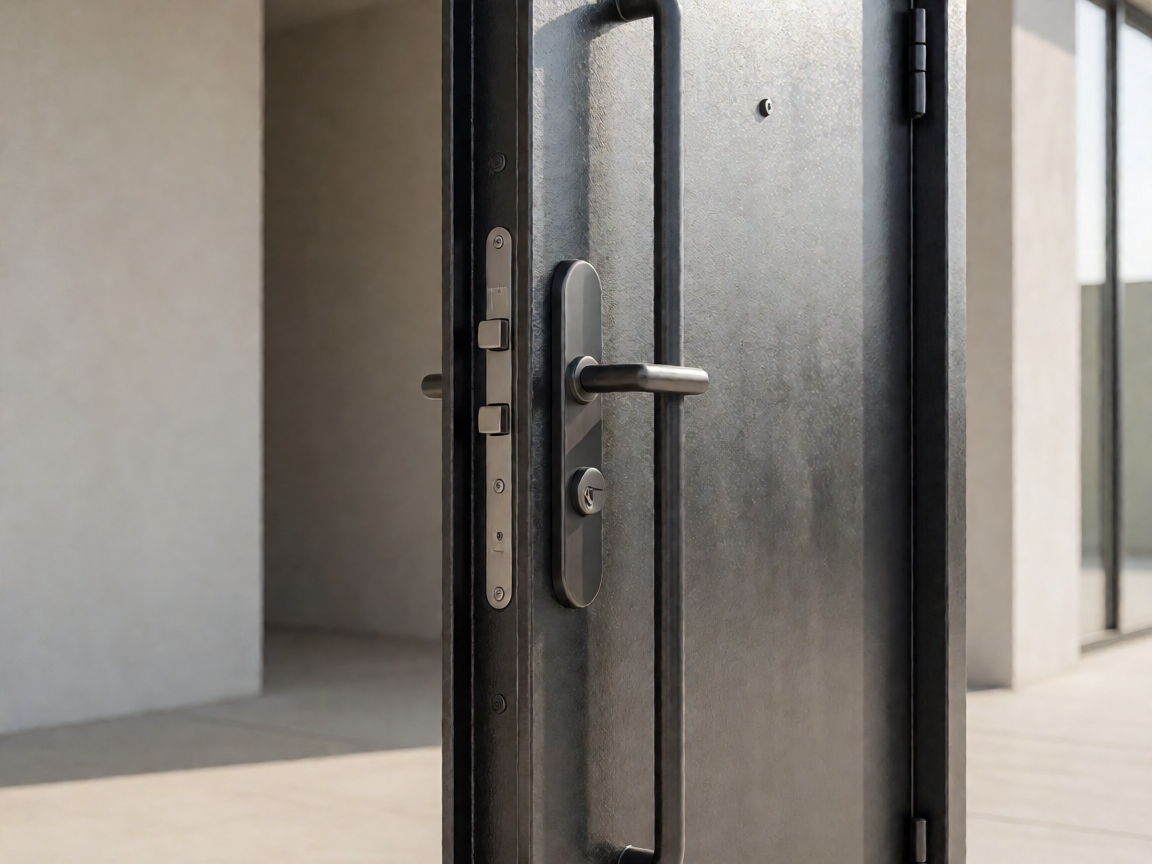
An impressive steel panel is only as strong as its weakest component — and that weak point is almost always the locking system. For 2026 projects, specify doors equipped with at least three-point, and ideally five-point, multi-lock mechanisms that anchor the door on the hinge side and the top and bottom edges simultaneously. The lock cylinder should be anti-drill and anti-pick, preferably meeting the SKG three-star or higher security rating if your project targets European markets. Hinges are equally important. Look for heavy-duty steel hinges with at least three mounting plates per side and anti-removal pins that prevent an attacker from lifting a door off its frame. In addition, ensure the strike plate is deeply recessed into the wall frame and reinforced with extended metal plates — a common weak spot that even expensive doors in our factory’s product audits have been found to exhibit. This combination of a rigid locking framework, reinforced hinge side, and protected anchoring contributes significantly to the door’s overall resistance to prying attacks.
Confirm Corrosion Resistance and Weather Sealing Performance
Steel doors in residential environments face daily exposure to rain, sunlight, temperature swings, and airborne pollutants. A security door that cannot resist corrosion will quickly lose its structural integrity — surface rust can compromise the panel-to-frame clearance and affect the engagement of locking pins. For homes within five kilometres of a coastline, specify powder-coated door panels over a zinc phosphate pre-treatment process; the coating thickness should be no less than 60 micrometres. The door frame’s thermal break is another critical consideration. In colder climates, a steel door without an efficient thermal break will conduct heat outwards, causing condensation, ice formation, and accelerated frost damage around the lock mechanism. In our factory tests, a high-quality thermal-insulated steel door with a multi-chamber frame can reduce U-values to below 1.2 W/m²K — compare this carefully with your project’s energy compliance requirements. In addition, triple silicone weatherstripping around the door perimeter prevents water ingress during heavy rain, maintains indoor temperature, and reduces dust penetration, which is particularly valuable for healthcare or high-end residential settings.
Evaluate Certification and Compliance Documentation
A professional B2B buyer should never accept a factory’s verbal guarantees without reviewing the actual certification documents and test reports. Valid certifications are region-specific; ask the manufacturer to clearly state labels such as CE marking (EN 14351-1), the Australian AS/NZS 5039 for security screen doors, or the American ASTM E330 structural test standard for exterior walls and cladding. Fire-resistance ratings, which are usually expressed in minutes (for example, 30 minutes or 60 minutes of integrity and insulation), should be evaluated if the building code requires specific egress protection. Also, check whether the door has been tested for forced-entry resistance according to EN 1627, measuring the effect of hammer blows, lever attacks, and electrical drills. Crucially, a certificate is only valid if the product as manufactured matches the tested sample — in practice this means verifying the exact steel sheet thickness, the number and location of locks, and the lock grade on the delivered goods. Reputable steel door manufacturers, including our ZW Doors production lines, maintain a complete traceability system that links each batch of doors to its corresponding certification reports.
Analyse Acoustic Insulation and Thermal Comfort Needs
Modern steel security doors are no longer purely mechanical
相关推荐