How to Select Fire-Rated Steel Doors for Apartment Buildings
Fire-rated steel doors are not merely building components; they are critical life-safety barriers that compartmentalize fire and smoke, allowing occupants valuable time to evacuate and protecting structural integrity. For apartment buildings, where hundreds of residents share corridors, stairwells, and utility spaces, the choice of fire-rated doors carries exceptional weight. Selecting the wrong product can lead to failed inspections, increased insurance premiums, or, in the worst case, tragic loss of life. This guide provides a systematic framework for procurement managers, architects, contractors, and property developers to evaluate fire-rated steel doors with confidence, ensuring code compliance, durability, and long-term performance.
1、Understanding Fire-Rating Standards and Certifications
The first and most non-negotiable criterion is compliance with recognized fire-testing standards. Different global markets adhere to distinct protocols, and your selection must match the jurisdiction where the apartment building is located. In North America, listings from UL (Underwriters Laboratories) or Warnock Hersey mark conformity with ASTM E152 and NFPA 252, typically expressed as ratings like 20, 45, 60, or 90 minutes. In Europe, BS EN 1634-1 governs fire resistance testing, with classifications such as EI30, EI60, or EI90 indicating both integrity and insulation capabilities. Meanwhile, China's GB 12955 standard is widely adopted across Asia.
When verifying certification, go beyond asking if the door is "fire-rated." Request the official test report and check the exact scope of the listing. Pay attention to whether the certification covers the complete assembly, including the frame, glazing, louvres, and hardware, rather than just the door leaf. A fire door is only as good as its weakest component. Also, confirm that the certification is current and recognized by your local authority having jurisdiction (AHJ). Some manufacturers provide bilingual or multi-standard test data, which can be invaluable for international projects requiring dual compliance.
2、Assessing Core Materials and Insulation Performance
The core construction of a fire-rated steel door determines its structural rigidity and fire-resistance duration. Most quality fire doors feature a steel face sheet with thickness ranging from 0.8 mm to 1.2 mm, wrapped around a dense core material. Common core options include mineral wool, ceramic fiber, or a proprietary fire-resistant board compound. These materials are non-combustible and provide excellent thermal insulation, preventing heat from radiating to the unexposed side of the door during a fire.
Ask your supplier for the core density and the specific composition. A core density of at least 400 kg/m³ is generally advisable for mineral wool-based doors. For high-rise apartments, doors rated at 60 minutes or above are often mandated by the stairwell pressurization and egress requirements. Additionally, verify that the core does not contain substances that emit toxic smoke or gases when heated. Reputable manufacturers publish material safety data sheets (MSDS) and can demonstrate test certificates for smoke toxicity and heat release rates, a consideration that is increasingly relevant under modern green building codes such as LEED v4.1 or BREEAM.
3、Evaluating Hardware and Closing Mechanisms
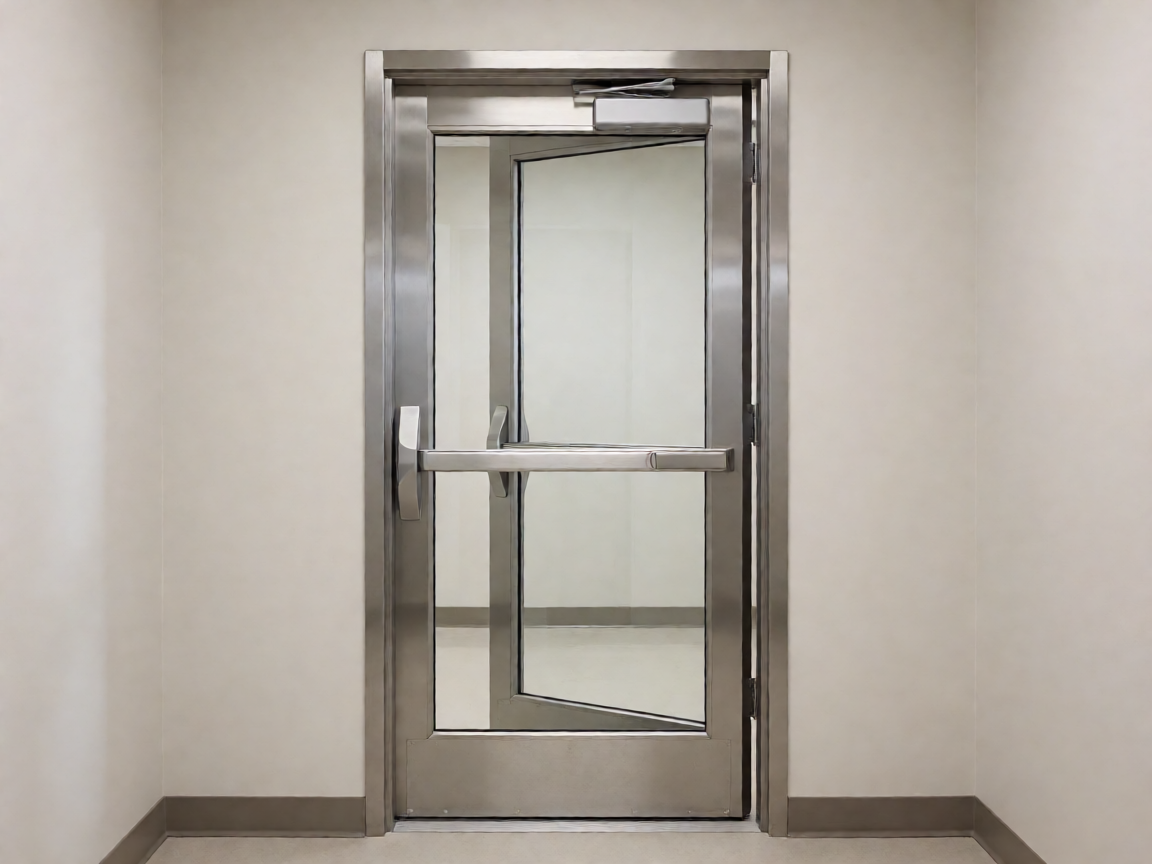
A fire-rated door is ineffective if it fails to close automatically and latch securely. For apartment buildings, self-closing devices are a code requirement in most jurisdictions. However, the hardware must be fire-tested in conjunction with the door assembly. Look for hinges that are certified for high-temperature endurance, and opt for grade 1 heavy-duty hinges for high-traffic common corridors where doors are opened frequently. A small-format double egress or panic hardware is often needed for corridor doors that lead to stairwells, allowing quick egress while maintaining fire integrity.
Door closers should be selected based on door weight and width, with adjustable closing speed and latching force. For apartment projects, consider concealed closers integrated into the frame to resist vandalism and tampering. Intumescent seals, which expand when heated to fill gaps between the door and frame, are also essential. Check that the seals are certified to the same fire rating as the door. Additionally, if the door includes a vision panel, ensure the glazing is fire-tested and that the glass retains its integrity under impact, as fire-induced spalling can create dangerous openings.
4、Considering Acoustic and Thermal Insulation
While fire safety is the primary function, apartment building occupants expect reasonable acoustic privacy and thermal comfort. A fire-rated steel door that doubles as an acoustic door reduces noise transfer between units, enhancing resident satisfaction and property value. Fire-resistant cores like mineral wool exhibit outstanding sound transmission class (STC) ratings. A typical 60-minute fire-rated steel door with a dense mineral core can achieve an STC rating of 35–40 dB, which is sufficient for most corridor-to-residence applications. If the building is located near a railway line or busy street, you may require a higher STC rating, which can be achieved by adding acoustic gaskets and increasing door mass without compromising fire performance.
Thermal insulation is equally relevant for exterior apartment doors or doors leading to unheated parking garages. Look for the U-value of the door system; doors with insulating cores and thermal-break frames can achieve a U-value of approximately 1.5–2.0 W/m²K. This reduces energy costs and prevents condensation on interior surfaces especially in climates with significant temperature swings. For projects pursuing green certification, pairing fire-rated steel doors with acoustic and thermal ratings simplifies documentation because the manufacturer can supply one integrated test report covering all three performance attributes.
5、Customization Options for Architectural Aesthetics
Apartment buildings, particularly upscale residential complexes, often require doors that satisfy strict fire codes while complementing the interior design language. Modern fire-rated steel door manufacturers offer a broad palette of finishes: powder coating in RAL colors, wood-grain laminates, vinyl wrapping that mimics oak or walnut, or even brushed stainless steel. For lobby and corridor areas, you may prefer flush doors with concealed frames, whereas for individual residential units, a more traditional recessed panel or molded profile can be fabricated while maintaining the fire rating through ceramic-stuffed reinforcement.
Door dimensions are another consideration. Apartment corridor doors are typically 900 mm wide × 2100 mm high, but some projects require larger, non-standard sizes such as double-leaf doors with a width of 1800 mm to accommodate wheelchair access or furniture moving. Ensure the supplier can handle custom dimensions while retaining the original certification. Important: any modification to a certified door, including cutting the leaf for a new louvre or glazing, voids the certification unless performed and re-certified by the manufacturer. Therefore, place a premium on suppliers who provide bespoke options from the factory rather than requiring field modifications.
6、Verifying Manufacturing Quality and Warranty Support
Not all steel doors are manufactured to equal tolerances. Poorly welded seams, thin steel gauges, and substandard galvanization are hidden defects that surface after a few years of use. Inspect the supplier's manufacturing credentials: ISO 9001 quality management certification, ISO 14001 environmental management, and, where applicable, EN 16005 safety. Ask for a sample door or visit a reference site where the product has been installed multiple years ago. A reliable question is: "What is your edge rebate's structural integrity, and can you provide the corrosion resistance test data under salt spray testing (ASTM B117)?" For coastal apartment projects, this is decisive.
Equally important is after-sales support. Fire-rated doors in apartment buildings are routinely subjected to impact by trolleys, wheelchairs, and moving furniture. Dents, scratches, and peeling of the powder coating are inevitable. A manufacturer that offers a warranty of 5–10 years against manufacturing defects, and that stocks spare components such as closers, seals, and hinges locally or through a distributor network, significantly reduces the building owner's total cost of ownership. Also, request the operation and maintenance manual. It should include inspection frequency, lubrication instructions, and clear guidance on not replacing standard screws with longer screws that may
相关推荐