How to Choose Steel Security Doors: Complete Guide for Residential & Commercial Projects

Steel security doors are no longer a simple afterthought in construction planning. For residential properties, they serve as the first line of defense against intrusion; for commercial projects, they must balance strict safety compliance with daily operational efficiency. However, the market is flooded with products labeled "security doors" that vary dramatically in steel thickness, core material, locking mechanisms, and overall build quality. Choosing the wrong door can lead to compromised safety, thermal leakage, and costly replacement within just a few years.
At ZW Doors, a factory specializing in steel security door manufacturing, we have produced and exported thousands of units for villas, apartments, offices, and industrial facilities. Based on our hands-on production experience, this guide breaks down the essential factors you must evaluate before placing an order. We will focus on measurable parameters rather than marketing jargon, giving you a clear framework for making an informed decision.
1.Steel Gauge and Frame Structure: The Backbone of Security
The first and most critical factor is the actual thickness of the steel used. In the industry, steel thickness is measured in millimeters or gauge numbers—but beware: a lower gauge number means thicker steel, yet some suppliers conveniently omit this detail. For residential front doors, we recommend a steel sheet thickness of at least 1.0 mm for the door leaf and 1.5 mm for the door frame. For commercial applications, such as bank back offices, data centers, or warehouse entry points, a 1.5 mm to 2.0 mm leaf thickness is often required to withstand higher physical impact and attempted forced entry.
Beyond the sheet itself, the internal frame structure determines how the door behaves under stress. A quality security door uses a reinforced steel skeleton—often with vertical and horizontal stiffeners—to prevent the door panel from being bent or pried open. At ZW Doors, we integrate a multi-chamber frame design that not only enhances rigidity but also creates space for thermal break materials. When inspecting a sample door, press your hand against the surface; a hollow, flimsy panel is a clear red flag.
2.Locking Systems: Cylinders, Bolts, and Multi-Point Locks
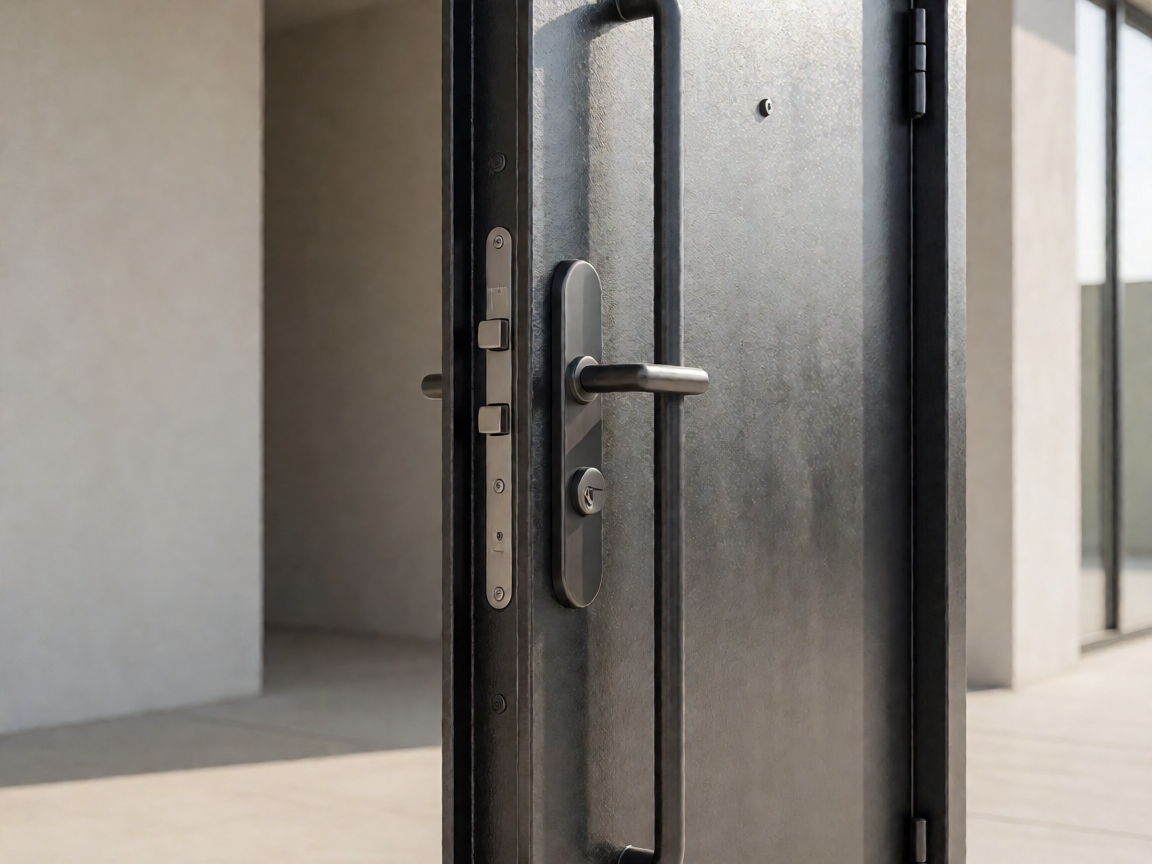
A security door is only as strong as its weakest point, and the locking system is that point in 90% of cases. A single-point deadbolt, no matter how heavy, can be defeated with a crowbar in under two minutes. For both residential and commercial projects, we strongly recommend multi-point locking systems. These locks engage bolts at the top, bottom, and side of the door, distributing force across the frame and making it exponentially harder to pry open.
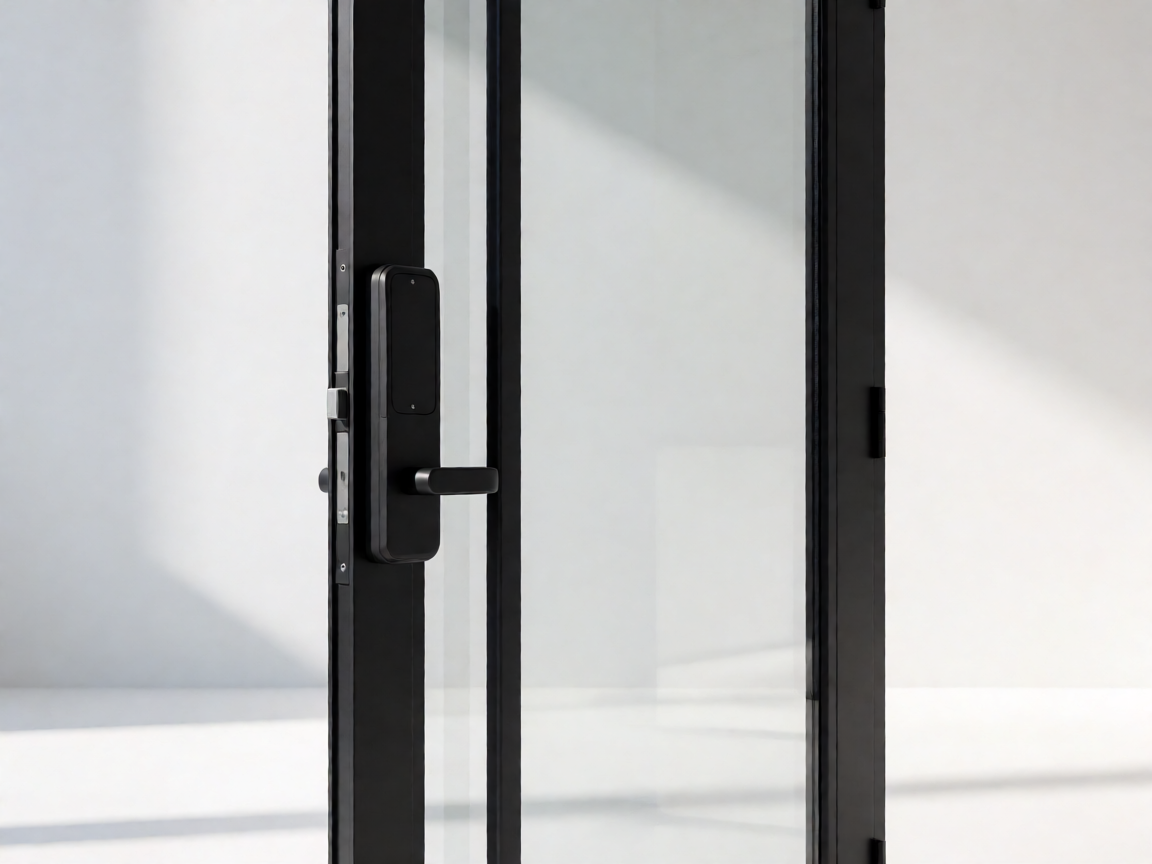
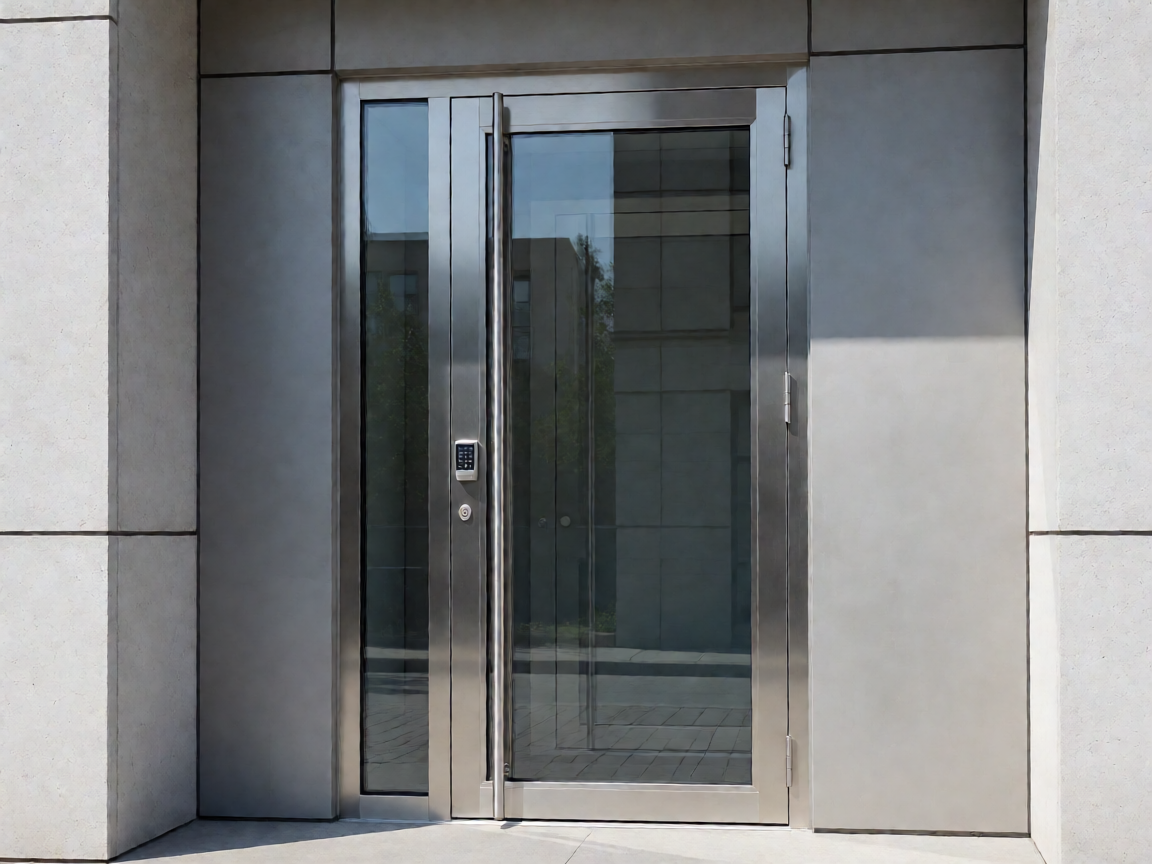
Pay close attention to the lock cylinder. European-grade cylinders with anti-drill, anti-pick, and anti-bump properties are the current standard for serious security. Look for markings such as CEN Grade 4 or equivalent certifications. Additionally, consider whether the lock allows a high-security key system that prevents unauthorized duplication—essential for commercial buildings where multiple contractors and tenants have historically had access to old keys. Some clients choose to integrate electronic access control (keypads, fingerprint readers) directly into the door. If that is your plan, ensure the door manufacturer offers a pre-cut lockbox and wire conduit to avoid messy on-site drilling.
3.Core Material and Thermal Insulation Performance
Steel is a highly conductive material, which means that without proper insulation, a security door can become a thermal bridge, driving up heating and cooling costs. When selecting a door, examine the core filling. Three common options exist in the market:
Polyurethane foam (PU): The premium choice, offering a thermal transmittance (U-value) as low as 1.0 W/m²K when combined with a thermal break frame. It also adds soundproofing rigidity to the door panel.
Honeycomb paper core: A low-cost filler mostly used in interior steel doors. It provides negligible insulation; we advise against it for exterior security doors.
Mineral wool / rock wool: Excellent for fire-resistant steel doors, as it can withstand high temperatures. It is often specified in commercial projects with fire-rated requirements.
For a residential villa in a climate with cold winters, we would recommend a 5 cm thick PU-cored door with a U-value of approximately 1.2 W/m²K. For commercial projects in mixed climates, mineral wool cores offer a good balance of insulation and fire resistance. Always request the technical datasheet for U-value and sound insulation (dB rating) from the manufacturer. If they cannot provide one, treat that as a warning sign.
4.Hinges, Seals, and Weather Resistance
Hinges are another often-overlooked weak point. A heavy steel door can weigh anywhere from 80 kg to 150 kg, and standard door hinges will sag under that load within a year. You should require heavy-duty stainless steel hinges—at least three per door—with sealed ball bearings for smooth, silent operation. Hidden hinges are an excellent upgrade for both security and aesthetic reasons, as they cannot be unscrewed from the outside when the door is closed.
Weather resistance matters for perimeter or exterior doors. In coastal areas, salt-laden air corrodes regular steel quickly. If your project is near the ocean, request a galvanized steel base or a powder-coated finish with a salt-spray test certification (typically 500 to 1,000 hours). At ZW Doors, we apply a two-layer anti-corrosion primer plus a durable polyester powder coating, which is standard for our export line. For additional protection against drafts, dust, and noise, ensure the door is fitted with multi-seal magnetic or EPDM rubber gaskets along the perimeter.
5.Certifications and Compliance for Commercial Projects
If your project is commercial, local building codes and insurance requirements will dictate minimum security and fire-safety standards. Before contacting a manufacturer, compile the following information:
The required fire rating (e.g., 30, 60, or 90 minutes) and whether the door needs a fire-rated certification from an accredited laboratory.
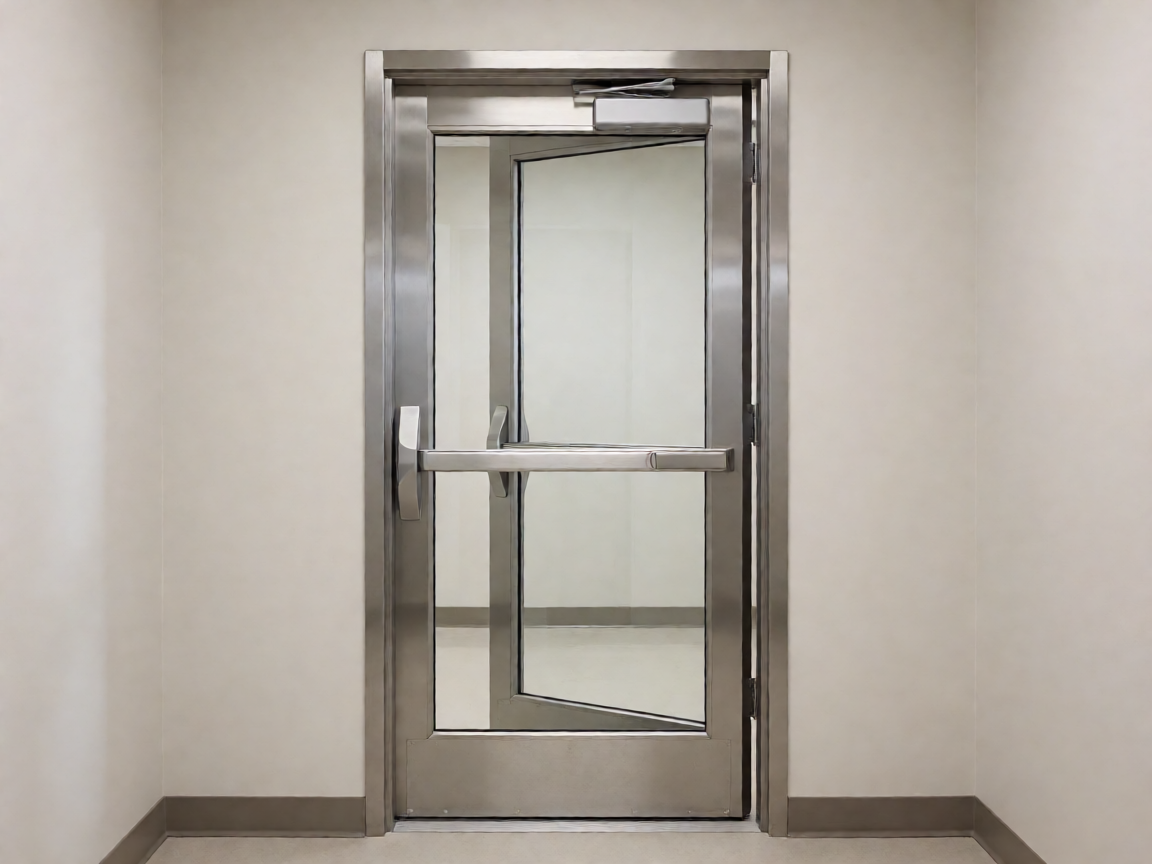
Whether the door must comply with specific burglar resistance standards like EN 1627 (European standard) or UL 752 (US standard for ballistic resistance).
The number of doors needed and the exact dimensions for each opening—custom sizes often have a longer lead time.
Even if you are buying from a factory like ours, always request a copy of the relevant certifications before paying a deposit. Reputable manufacturers will be transparent about the testing bodies and standards their products meet. For a commercial project, the extra 5% you pay for certified doors could save you from severe legal liabilities in the event of a break-in or fire-related incident.
6.Esthetic Design and Panel Customization
Security should never force you to compromise on building aesthetics. Modern steel security doors are available in a wide range of designs—from minimalistic flat panels to embossed wood-grain textures that mimic natural timber without maintenance headaches. Powder coating offers unlimited color options (including RAL color matching), and you can specify custom glass openings, ventilation grilles, or forged iron decorative elements.
From a design coordination perspective, ensure the door color and texture align with your building's architectural style. For example, a high-end residential project in a warm climate might favor a matte dark bronze finish, while a corporate office may require a clean silver-grey with horizontal brushed lines. Our factory provides free color samples and CAD drawings to help you visualize the product before production. We have seen many clients originally plan to install wooden doors but switch to steel once they realize the security upgrade and long-term value are significant—especially since steel doors do not warp, crack, or require repainting every few years.
7.Logistics, Lead Time, and After-Sales Support
Buying from overseas manufacturers, such as a factory in China, requires careful attention to logistics. Standard lead time for a custom steel security door order is typically 20–35 days for production, plus 15–30 days for sea freight depending on the destination port. When comparing quotes, ask what is included in the price: FOB (free on board) or CIF (cost, insurance, and freight). FOB quotes are lower but put all shipping arrangements on you; CIF gives you a total landed cost but still excludes customs clearance and inland delivery.
Additionally, consider packaging. The doors must be packed with protective foam corners, stretch film, and a sturdy wooden crate or pallet to survive the 20,000-kilometer ocean journey without scratching the powder coating. At ZW Doors, we use moisture-proof paper and nailed wooden frames for all export packaging. As for aftersales, choose a supplier that offers a reasonable warranty (usually 1-3 years for the door body and 5 years for the powder coating) and responds to messages within 48 hours.
Conclusion
Choosing the right steel security door is a matter of understanding material quality, hardware, insulation, and certifications—not just comparing pictures and prices online. For residential projects, focus on multi-point locks and PU-cored insulation; for commercial projects, prioritize fire ratings and heavy-gauge construction. Always ask a potential manufacturer for test reports, physical samples, and a clear itemized quotation. A slightly higher upfront investment in a well-engineered door will protect your property, lower energy bills, and save you from replacement costs for decades.
An informed buyer makes the best purchasing decision. If you are currently comparing security doors for an upcoming project, which of the factors above is your top priority—steel thickness, locking system, thermal insulation, or compliance standards? Share your thoughts in the comments, and our team at ZW Doors will help you narrow down the best solution.
相关推荐