Commercial & Industrial Doors: What Project Case Studies Can Teach You
Commercial & Industrial Doors: What Project Case Studies Can Teach You
Specifying exterior doors for a villa, a boutique hotel, or a light-industrial facility usually raises the same concerns. Will the frame corrode in a coastal or high-humidity climate? Can the door be manufactured for an opening that is not a standard size? How much maintenance will it demand three or five years from now? Will a heavy leaf sag, leak, or rattle once it is installed? Case studies from completed projects answer these questions more honestly than a brochure does. Across residential compounds, hotel entrances, and warehouse units, the same lessons repeat: material grade determines service life, internal structure determines how a leaf behaves over time, and pre-installation planning determines whether the finished door looks purpose-built or added on. This article distills those lessons into practical guidance on commercial & industrial doors.
Core Materials: What Finished Projects Confirm
Project records show that failures are rarely caused by design taste. They are caused by alloy choice, coating system, and hardware grade. The materials below are the ones that consistently survive long-term exposure.
- Extruded aluminium frame (6063-T5 or 6061-T6): The standard for exterior doors because it resists rust without painting, holds tolerances well, and carries structural loads without excessive weight. Thinner recycled alloys are the most common source of distortion complaints in coastal sites.
- Cast aluminium panels: A cast aluminium villa door uses thick, mould-cast panel sections rather than thin rolled sheet. The result is deep relief patterns, better resistance to denting, and edges that do not flex under impact. Case studies in windy regions consistently favour cast over pressed panels.
- Stainless steel 304 hardware: Hinges, handles, and lock bodies are the first parts to fail in salt air. Grade 304 is the practical minimum; grade 316 is justified within roughly 1 km of the sea.
- Coating systems: Standard powder coating performs well inland. For coastal, desert, or high-UV regions, fluorocarbon (PVDF) coating retains colour and gloss far longer and is the specification most often corrected after the fact.
Structure and Specifications Explained
Specifications only make sense when each number is tied to a function. The table below reflects typical values for exterior residential and light commercial door systems.
| Component | Typical specification | Why it matters |
|---|---|---|
| Frame thickness | 2.0–3.0 mm extruded aluminium | Carries leaf weight and resists wind deflection |
| Panel thickness | 1.5–2.0 mm aluminium sheet, or 8–12 mm cast panel | Impact resistance, flatness, pattern depth |
| Filling | Aluminium honeycomb filling or PU foam | Rigidity, sound reduction, thermal insulation |
| Glazing | 6 + 6 mm laminated tempered glass, optional low-E | Safety, security, heat and noise control |
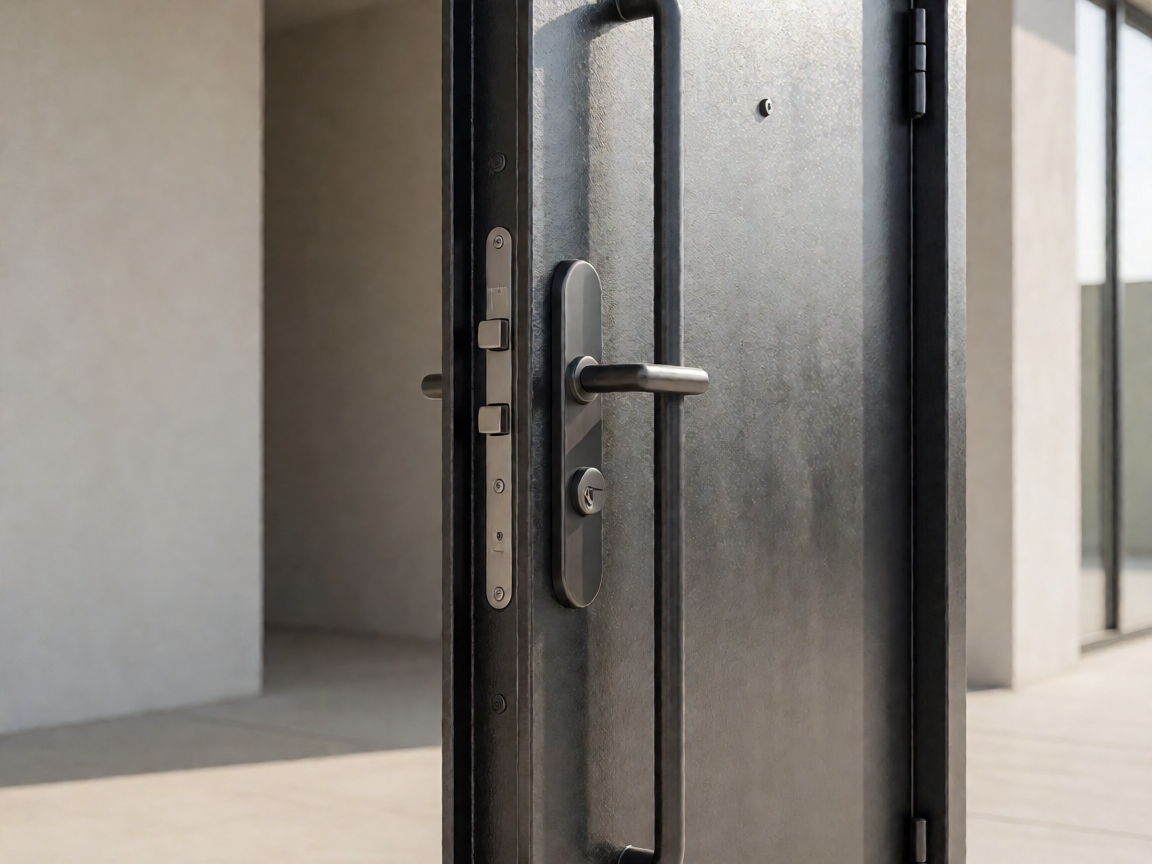
| Lock system | Multi-point mortise lock, 3-point or smart fingerprint lock | Anti-pry security and daily convenience |
| Hinges | 3D-adjustable stainless steel | Compensates for settlement without re-welding |
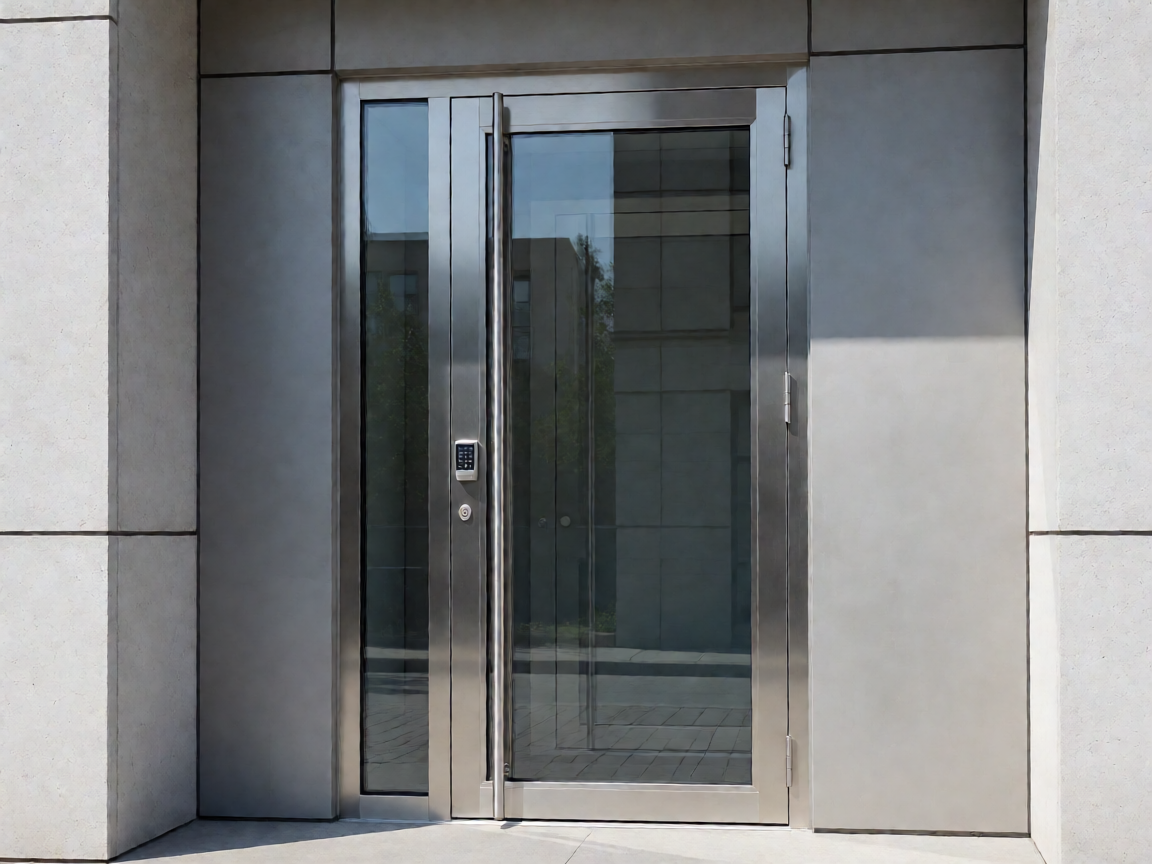
Internal structure is where cheap doors and durable doors diverge. Aluminium honeycomb filling keeps a large leaf flat and light, so hinges stay aligned and the door closes with consistent pressure across its height. A glass spliced exterior door — where glass sections are set between aluminium or cast panel segments — needs a properly drained glazing channel and EPDM gaskets, otherwise water sits against the seal and eventually reaches the frame. Thermal breaks, double seals, and a sloped sill are the details that decide whether a door passes a heavy-rain test in year five.
Key Advantages for Villa Exterior Applications
- Security without bulk: A reinforced frame combined with a multi-point lock and a smart fingerprint lock resists prying more effectively than a thicker single-point leaf.
- Rust resistance: Aluminium and stainless hardware remove the repainting cycle that steel gates require, which matters in coastal and humid regions.
- Low maintenance: Periodic cleaning of the track, gaskets, and drainage holes is normally the entire maintenance requirement.
- Custom sizing: Villa openings are rarely standard. Factory-built doors sized to the actual rough opening avoid the filler strips and sealant lines that weaken weatherproofing.
- Thermal and acoustic comfort: Honeycomb filling and laminated glass noticeably reduce street noise and heat transfer at the entrance.
- Design continuity: The same frame and finish system can be extended to garage, garden, and service doors for a consistent façade.
Available Custom Options
Customization is where a project gains both practical value and visual identity. Options commonly requested in residential and commercial work include:
- Finish and colour: Powder coating or PVDF fluorocarbon in any RAL shade, plus wood-grain and matte-texture finishes.
- Opening direction: In-swing or out-swing, left or right hand, single or double leaf, plus sliding and pivot configurations for wide entrances.
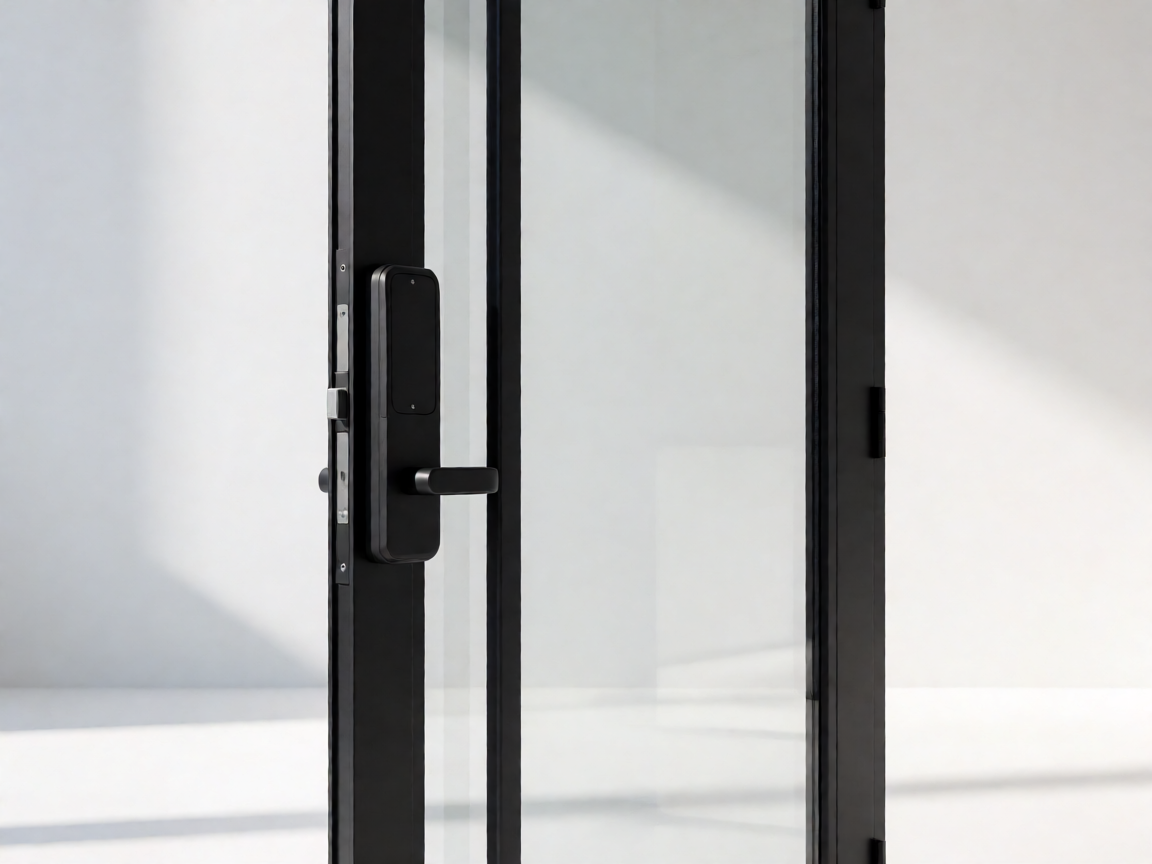
- Smart fingerprint lock: Fingerprint, PIN, card, and app entry, with mechanical override for power outages. Provision must be made for low-voltage wiring to the frame.
- LED decoration: Integrated handle or frame lighting for evening visibility and entrance styling; specify IP-rated components for outdoor use.
- Transom lintel: A fixed upper section that raises door height, adds daylight, and lets a tall opening be divided without an oversized moving leaf.
Buying and Selection Tips
- Measure the rough opening at several points, width and height. Masonry openings are frequently out of square by 10 mm or more.
- Confirm the wall type and anchoring method before ordering; frame fixing details differ for brick, block, and steel stud.
- Match frame thickness to leaf weight and expected wind load, not to price alone.
- Ask which filling is used. If honeycomb or foam is not confirmed in writing, assume it is absent.
- Request glass certification and check whether laminated, tempered, or low-E glazing is included in the quoted price.
- Plan power and conduit for smart locks and LED elements during the electrical phase, not after plastering.
- Review shop drawings showing opening direction, hinge side, and drainage before production begins.
- Schedule installation after paving and drainage are complete so the sill is not damaged or re-set.
- Confirm packaging, shipping protection, and the warranty terms for coating and hardware separately.
Conclusion
Project case studies point to a simple conclusion: durability is decided long before installation. Alloy grade, panel construction, aluminium honeycomb filling, glazing details, and lock quality determine whether a door still performs a decade later. For villa owners, builders, architects, and renovation contractors, the practical approach is to specify the structure first, then the finish, then the smart features — and to size everything from the real opening rather than a catalogue dimension. Commercial & industrial doors that follow this sequence are the ones that stay secure, rust-free, and quiet long after the project handover.
Meta description: How real project case studies inform the choice of commercial & industrial doors — materials, structure, villa applications, custom options and buying tips.
相关推荐