Emergency Exit Doors: Maintenance Checks for Reliable Egress
A villa's emergency exit door is rarely used, and that is precisely why it fails when it matters. Owners worry about security, architects worry about how a back-of-house door looks beside a stone façade, and contractors worry about whether a custom-sized leaf will still swing freely after two damp winters. Behind all three concerns sits maintenance: a door that is never opened, never inspected, and never adjusted will eventually bind at the hinge, seize at the panic bar, or settle out of square until the latch no longer releases. This guide covers what egress-rated exterior doors are actually made of, how they are specified, and the checks that keep the egress path reliable for the life of the building.
Core Material: What Reliable Emergency Exit Doors Are Built From
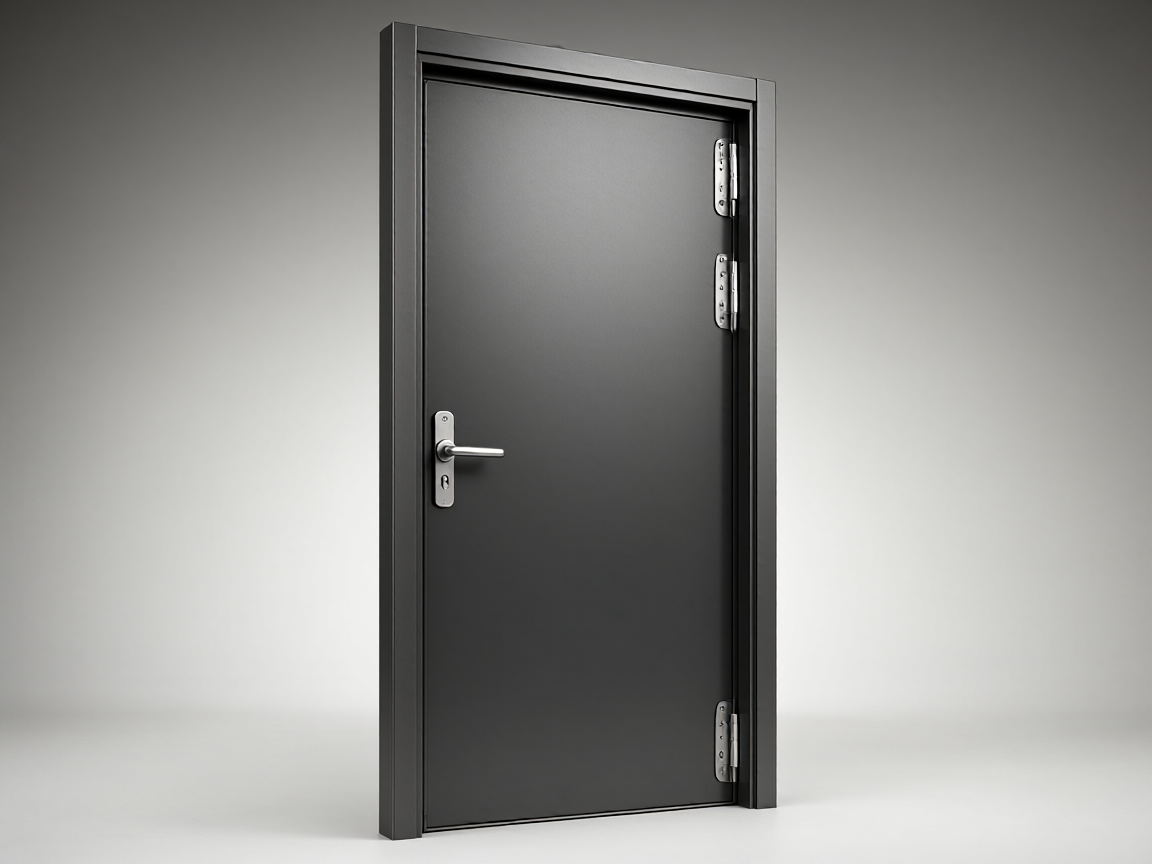
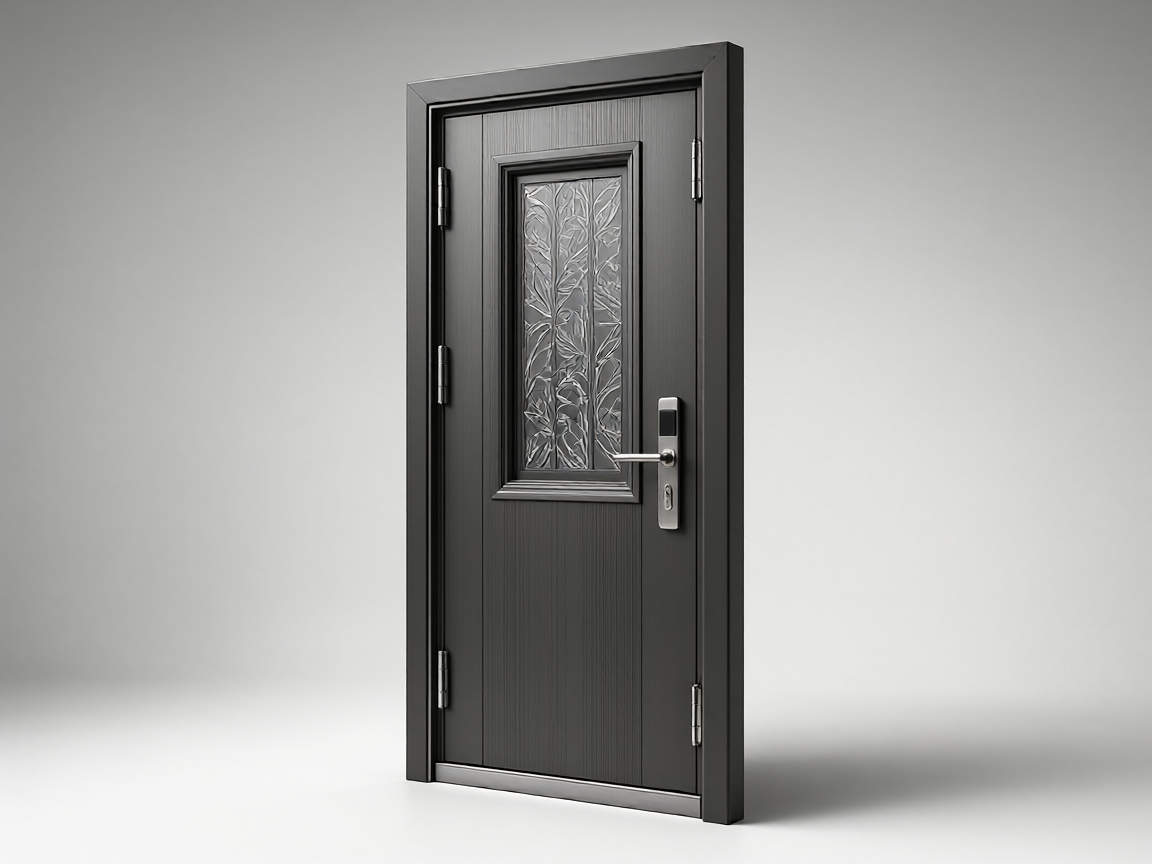
Egress hardware is only as dependable as the substrate holding it. ZW Doors builds exterior egress doors on extruded 6063-T5 aluminum alloy profiles, a heat-treatable grade chosen for dimensional stability, machinability, and consistent wall thickness. Decorative leaves can be faced with cast aluminum panels (A356 alloy) for the deep relief profiles associated with a cast aluminum villa door, while the structural frame behind the ornament stays extruded.
The material choice is a maintenance decision as much as a design one. Steel doors rust first at the bottom rail, the hinge pockets, and the strike plate — exactly the points where egress hardware binds. Aluminum forms a thin, adherent oxide layer instead of flaking rust, so latch pockets stay true and hinge plates do not swell. All fasteners, hinges, and panic hardware are specified in 304 or 316 stainless steel, and coastal projects should default to 316.
Product Structure and Specifications
- Frame thickness: 2.0 mm as standard; 2.5–3.0 mm for openings wider than 1,200 mm or high-traffic garden and pool-side exits.
- Plate thickness: 1.5–2.0 mm aluminum sheet for the leaf skin; 8–10 mm for cast decorative panels.
- Filling: aluminum honeycomb filling bonded to the skins. It is light, rigid, moisture-proof, and — most importantly for egress — holds the leaf flat so the door latches and releases cleanly in every season.
- Glass: 6.38–8.76 mm laminated tempered safety glazing on any glass spliced exterior door, with gaskets that stay pliable below freezing.
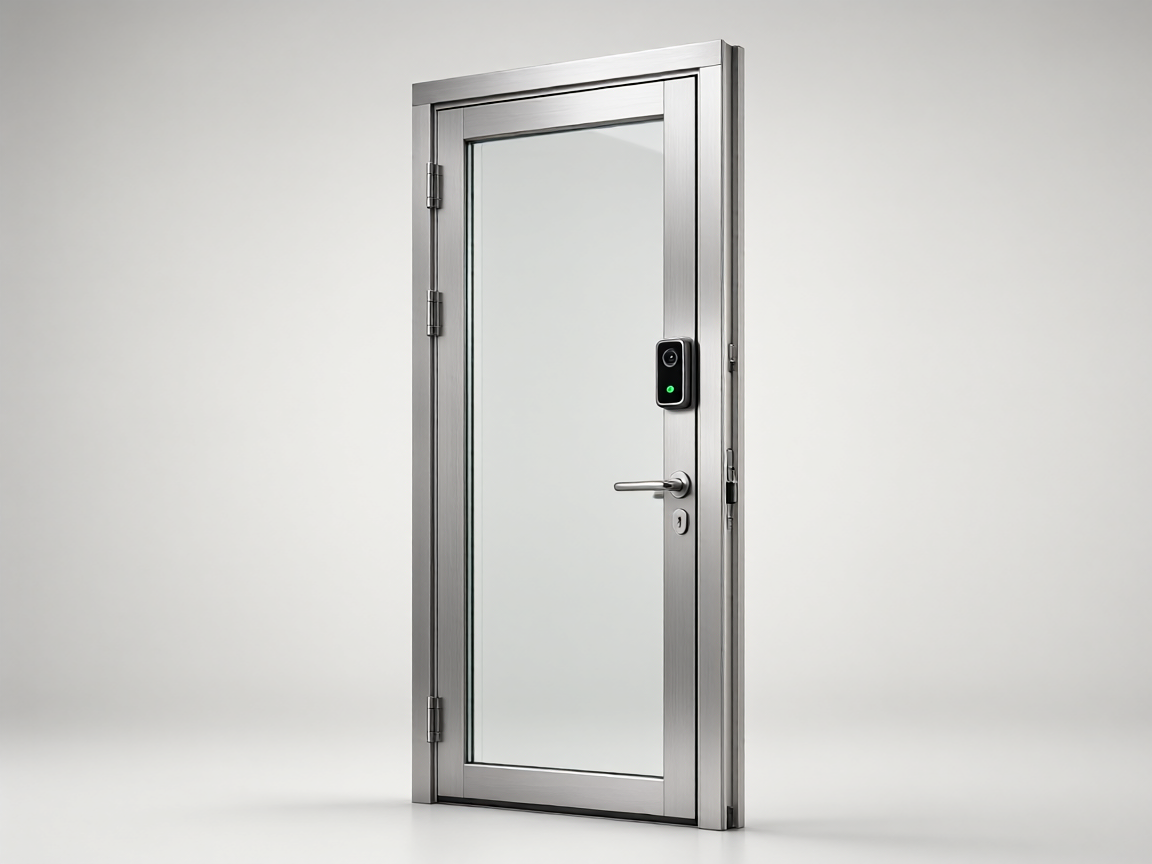
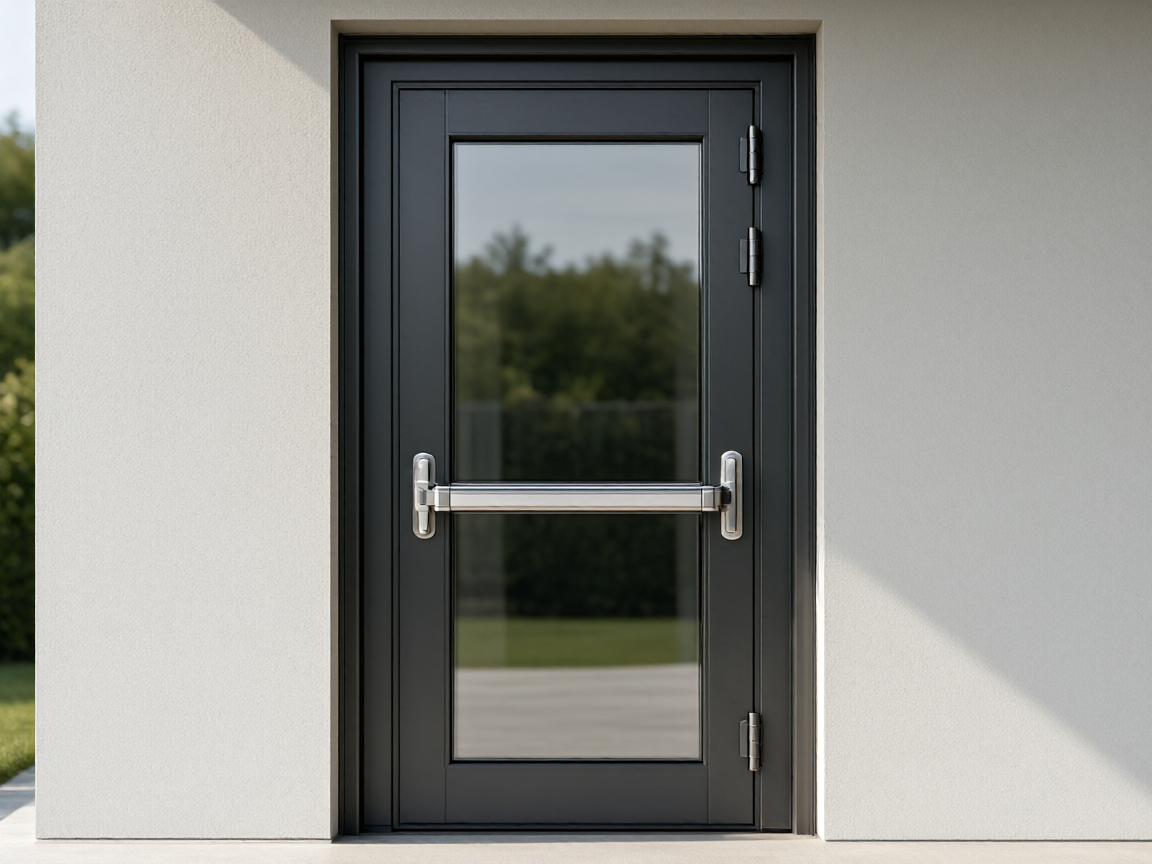
- Lock system: single-motion panic bar or push pad rated at 15 lbf (67 N) or less, with no key, keypad, or special knowledge required from the inside. A smart fingerprint lock can be fitted on the exterior face provided a fail-safe mechanical override is included.
- Hardware: 3D-adjustable hinges, hydraulic closer, threshold no higher than 13 mm with a bevelled edge, and perimeter weather and smoke seals.
Key Advantages for Villa Exterior Applications
- Code-compliant without looking institutional. Panic hardware can be concealed behind a slim push rail, so a service exit reads as part of the architecture.
- Corrosion resistance in humid and coastal climates. Powder coating at 60–80 µm, or PVDF at 25 µm for salt-spray exposure, protects the frame where a steel door would already be blistering.
- Low maintenance. No rust treatment, no repainting schedule, and no seized fasteners at the hinge pocket.
- Thermal and acoustic stability. The honeycomb core limits warping across wide temperature swings, which keeps the leaf square in the frame.
- Security with a visible egress path. Laminated glass keeps the route daylit and observable while resisting forced entry.
Available Custom Options
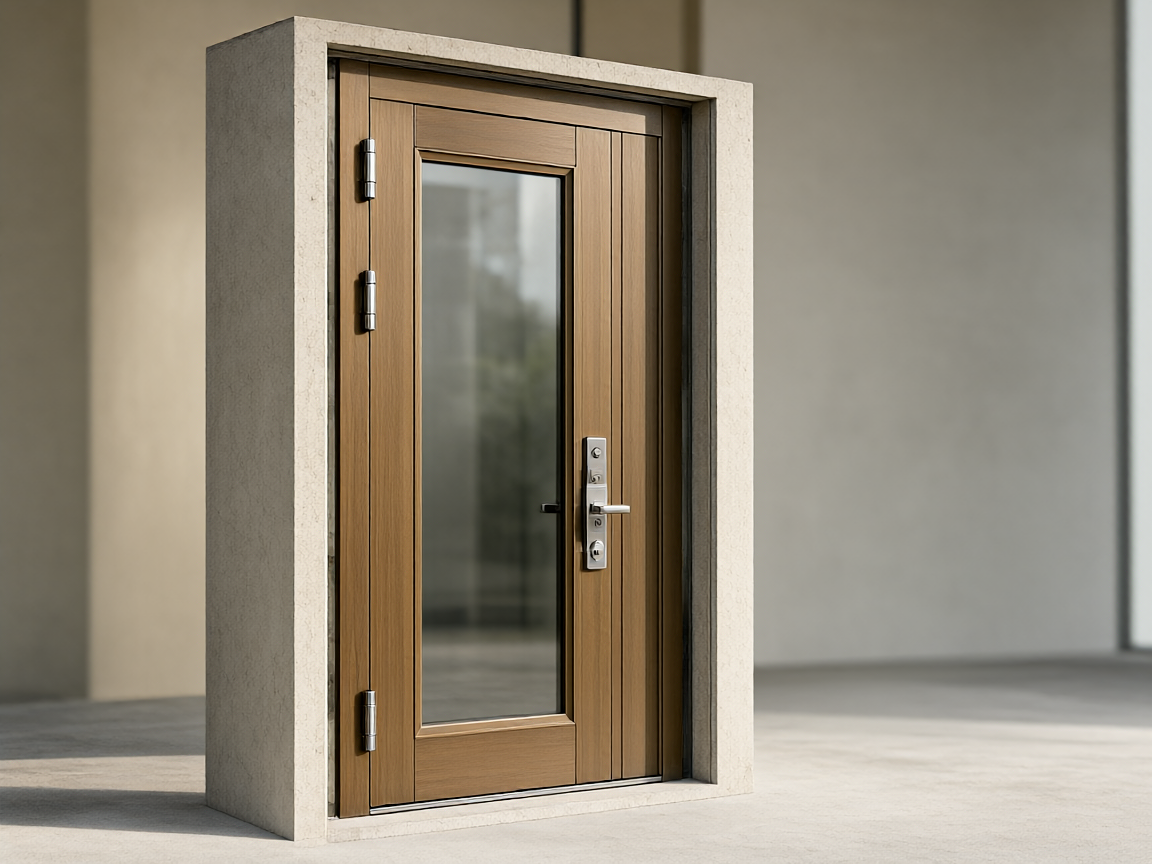
- Finish: powder coat in any RAL colour, PVDF for coastal sites, anodized, or wood-grain sublimation.
- Colour: matched to the main entrance or the façade joinery.
- Opening direction: outswing as the egress default, left- or right-handed to suit the approach.
- Smart lock: fingerprint, keypad, or app entry outside, always with a mechanical override inside.
- LED decoration: threshold or frame strip lighting, wired to the emergency circuit so it illuminates the path during a power failure.
- Transom lintel: fixed or openable transoms for taller openings without exceeding leaf weight limits.
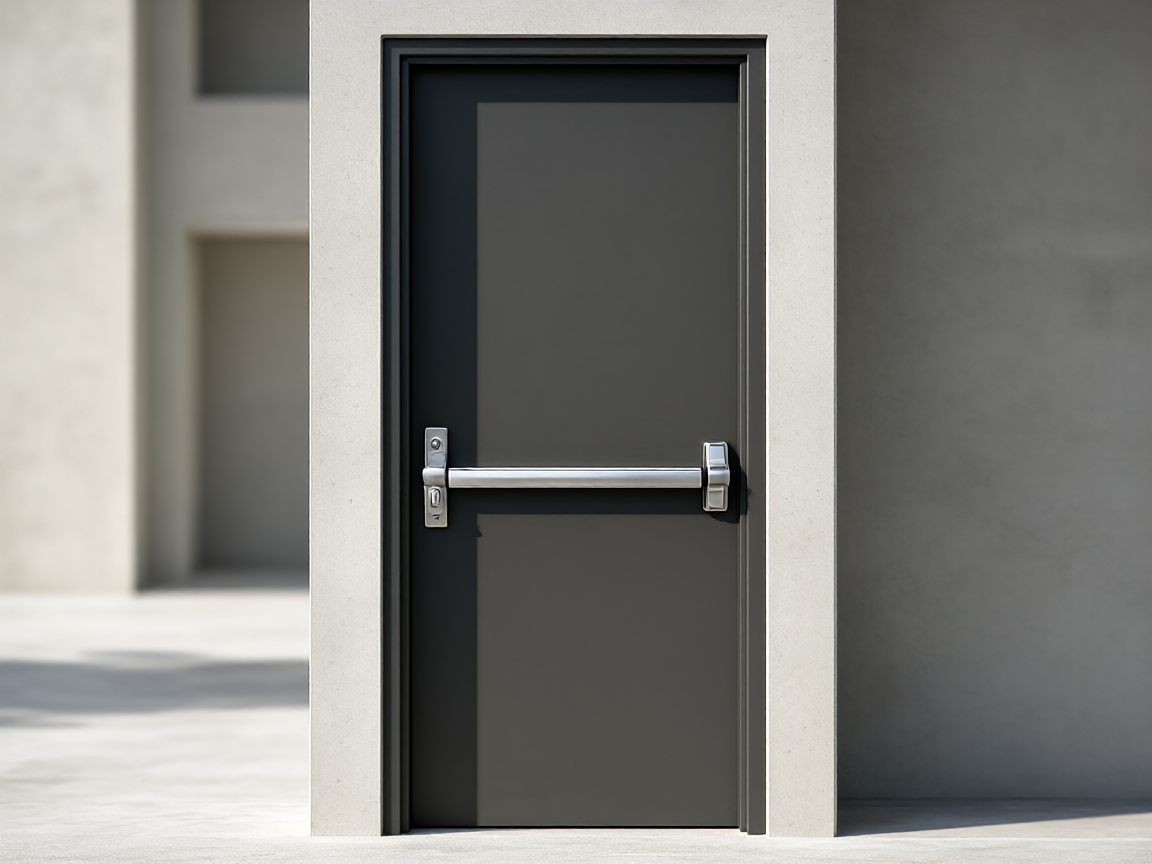
The same construction logic applies to a custom aluminum courtyard gate that sits on or beside the egress route — it should swing freely, latch without a key from the inside, and be inspected on the same schedule.
Buying, Selection, and Maintenance Checks for Reliable Egress
Confirm the applicable code before ordering: IBC and NFPA 101 in North America, EN 179 or EN 1125 in Europe, AS 1905.1 in Australia. Verify a clear opening width of at least 815 mm (32 in), ask for salt-spray and glass certification reports, and check that the panic hardware carries a listed rating. On site, check plumb and level before anchoring, shim the frame at the hinge and strike sides, and cycle the door at least twenty times before handover.
Maintenance schedule
| Interval | Check | Pass criteria |
|---|---|---|
| Monthly | Operate from inside with one motion | Latch releases without a key or special knowledge; force under 15 lbf |
| Monthly | Egress path clearance | Nothing stored within the swing or approach |
| Quarterly | Hinges and fasteners | Dry PTFE lubricant applied, screws torqued, no play in the leaf |
| Quarterly | Weather and smoke seals | Even compression, no gap over 3 mm at head or jambs |
| Quarterly | Smart lock and override | Battery above 30%, reader clean, mechanical release confirmed |
| Biannually | Closer and self-latching | Door closes and latches from a 30-degree open position |
| Annually | Corrosion and finish | No blistering at sill or threshold; touch-up applied where needed |
| After storms | Full cycle test | Door swings, latches, and releases cleanly |
Conclusion
Reliable egress is the product of two things: a door built from materials that do not fight their own hardware, and an inspection routine that never lets a small adjustment become a blocked exit. Specify aluminum frames, a stable honeycomb core, certified panic hardware, and a smart lock with a mechanical override — then put the checks above on the calendar. For villa owners, builders, and architects sourcing egress-rated exterior doors, the practical next step is to request sample profiles, hardware certifications, and a maintenance schedule alongside the quotation.
相关推荐